CASE STUDY
TrustClarity: AI-Accelerated Modernization of a B2B Surplus Equipment Platform
IMPACT
Website rebuilt in 2 weeks, 16,597 SEO errors resolved, 5 services instrumented, company-wide Claude AI adoption, and a POC scaled into a major lead generation tool
Full-stack platform modernization for a B2B surplus equipment marketplace — legacy website rebuilt in 2 weeks, enterprise observability, Claude-powered n8n workflow automation, and a POC inventory tool scaled into a major lead generation product.

IMPACT AT A GLANCE
16,597
SEO fixed
2 weeks
Rebuild
5
Services
TIMELINE
Website: 2 weeks; full platform Jan–Mar 2026
ROLE
Solo Full-Stack Consultant — strategy, frontend, infrastructure, observability, analytics, automation, and product
TEAM
Solo engagement
THE CHALLENGE
TrustClarity's platform had accumulated years of technical debt at every layer: a legacy website with a silent SEO-destroying canonical bug, five production services with zero observability, analytics fragmented across two domains, manual workflows creating operational drag, and no AI tooling across the team. Meanwhile, the product roadmap needed an AI-powered lead generation tool — fast — to support their sales motion.
THE RESULTS
- Led company-wide Claude AI adoption: championed Claude Team account, integrated Claude Code throughout the engagement, and wired the Claude API into production n8n workflows
- 3 Claude-powered n8n automations in production — Google Ads pipeline, GitHub PR notifications across 5 microservices, and Jira heartbeat — with 70%+ resource reduction vs. prior workflows
- AI-powered Inventory Evaluation Tool shipped across 6 epics and 25+ stories, live in the TrustClarity sales process
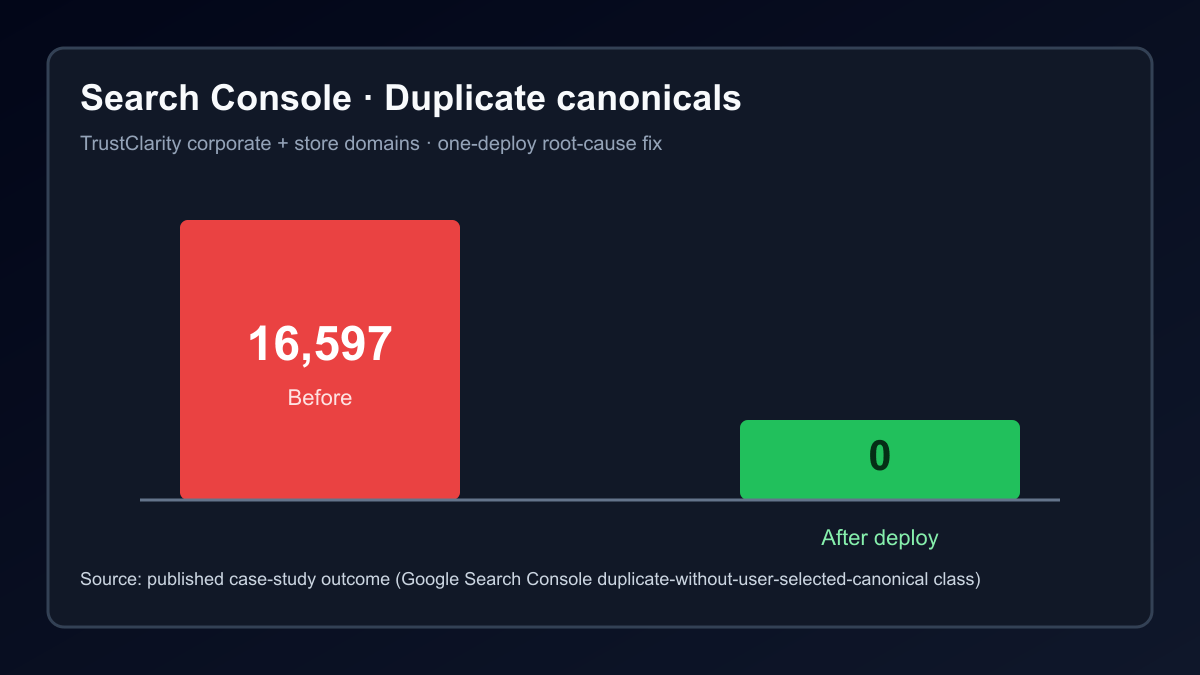
- 16,597 duplicate canonical SEO errors resolved in a single deployment by fixing root-cause logic in canonical URL generation
- 13 HTML pages modernized with Bootstrap 5.3; 520-line design system replacing 200+ CSS conflicts
- 5 production services fully instrumented with OpenTelemetry (server-side traces + browser Web Vitals), all reporting to SigNoz
- 21 Terraform-managed alerting rules deployed across all services, routing to Microsoft Teams
- GA4 unified across trustclarity.com and store.trustclarity.com; GTM migration, Apollo visitor identification, and Klaviyo event tracking integrated
- Website redesign delivered in 2 weeks; stakeholder feedback and inventory-tool integration extended the full rollout, resulting in a consistent design and a POC elevated into a primary lead generation tool
THE SOLUTION
Delivered a four-track modernization engagement covering frontend redesign, SEO remediation, full-stack observability on AWS ECS, and an AI-powered lead generation product. Claude was central to every track — used as the primary development tool via Claude Code, wired into production automation workflows via the Claude API and n8n, and adopted company-wide through a Claude Team account championed during the engagement.
TECHNOLOGIES USED
- Claude API
- n8n
- OpenTelemetry
- Terraform
- Bootstrap 5.3
- AWS ECS
- SigNoz
- Node.js
Project Details
What was broken across the legacy platform?
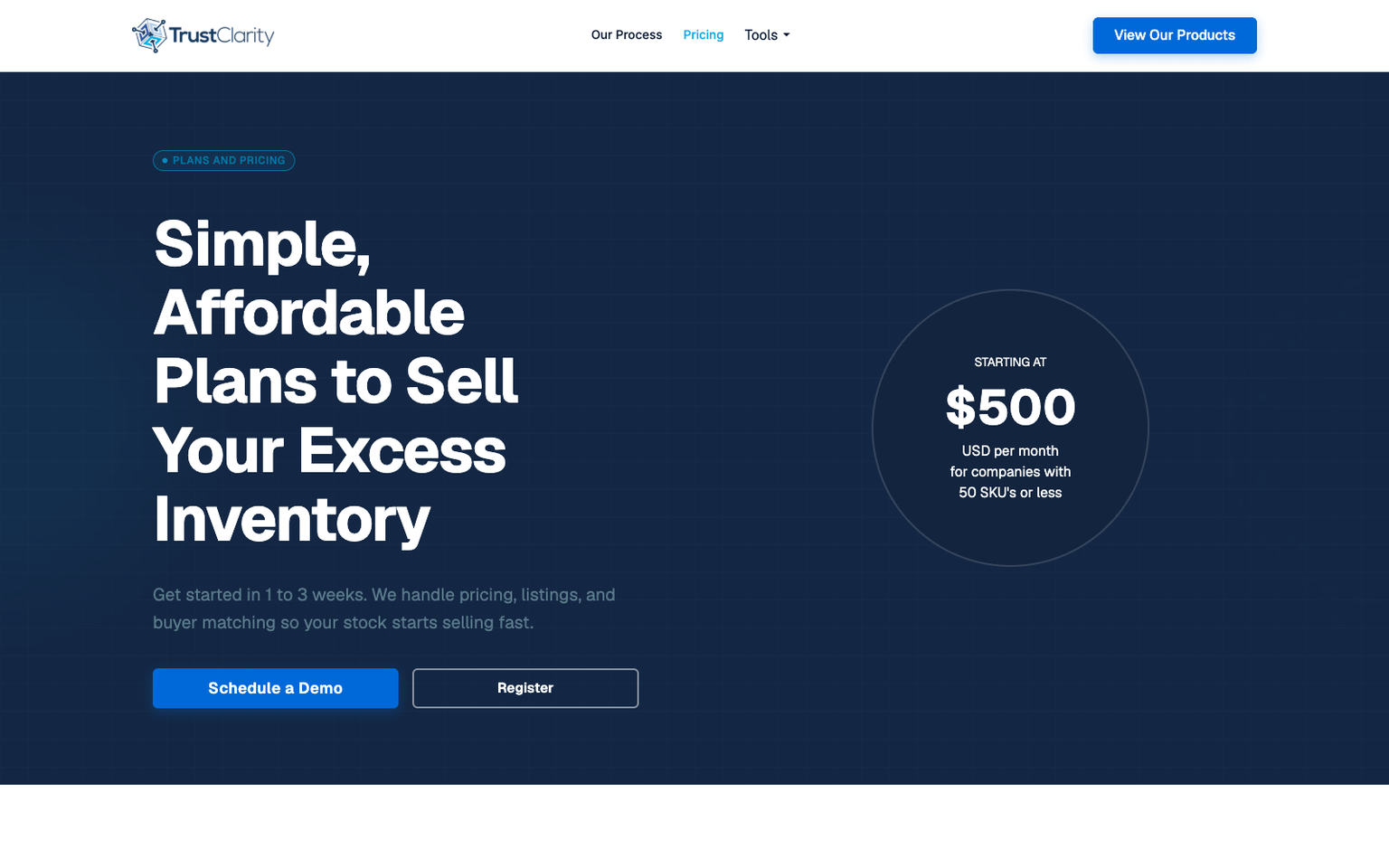
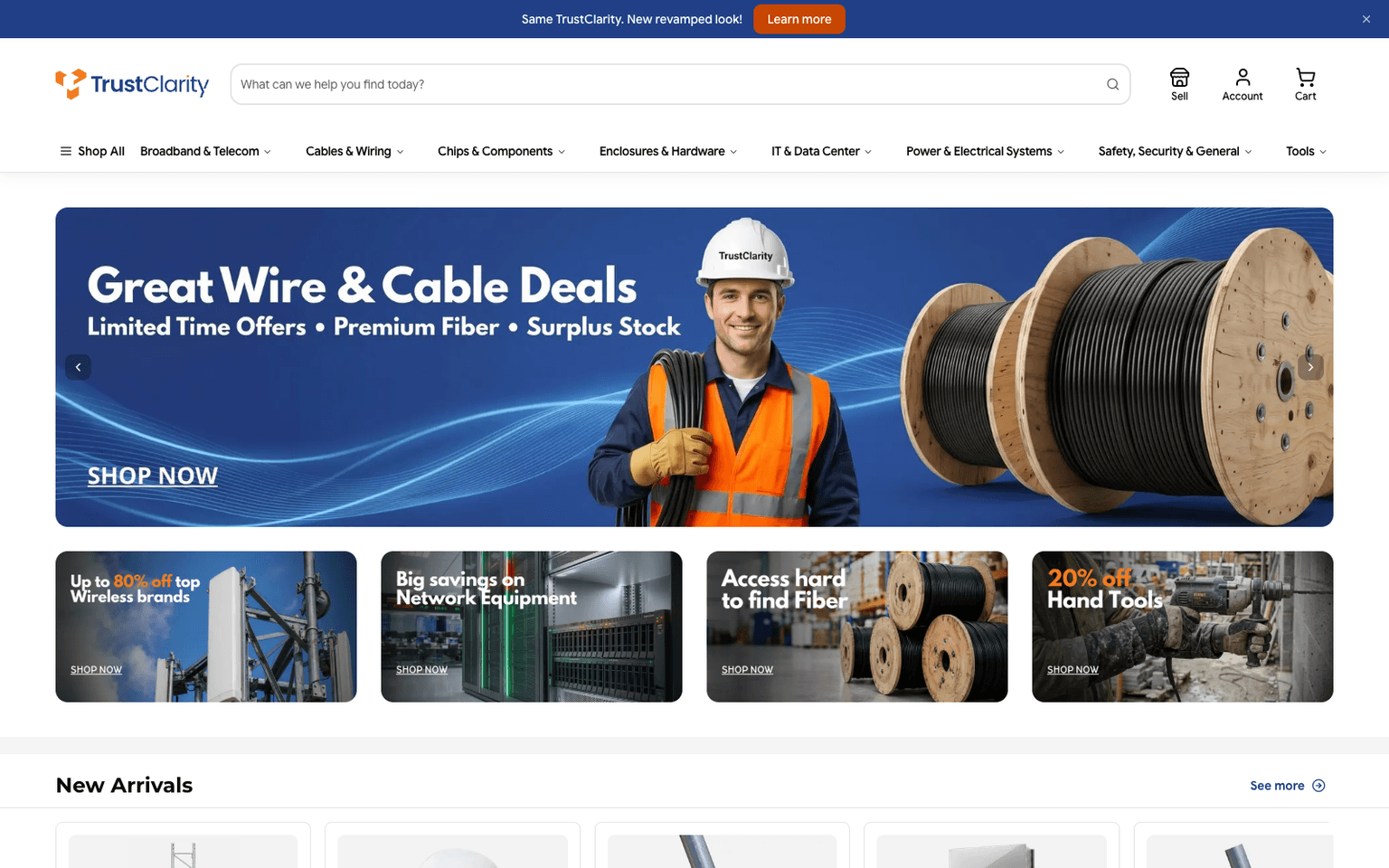
TrustClarity's corporate site told the wrong story and the wrong search engines. The old homepage split the screen between a white text column and a dark sci-fi background, with a product search widget competing for attention. Behind the scenes, canonical tags pointed at the wrong origin, so Google treated every page as a duplicate. Five production services — the corporate site, buyer app, admin API, knowledge graph, and legacy frontend — had no shared observability. Analytics were split across domains, workflows were manual, and the team had no AI tooling while the roadmap needed a lead-generation inventory tool quickly.

How was the platform modernized without sacrificing SEO or operations?
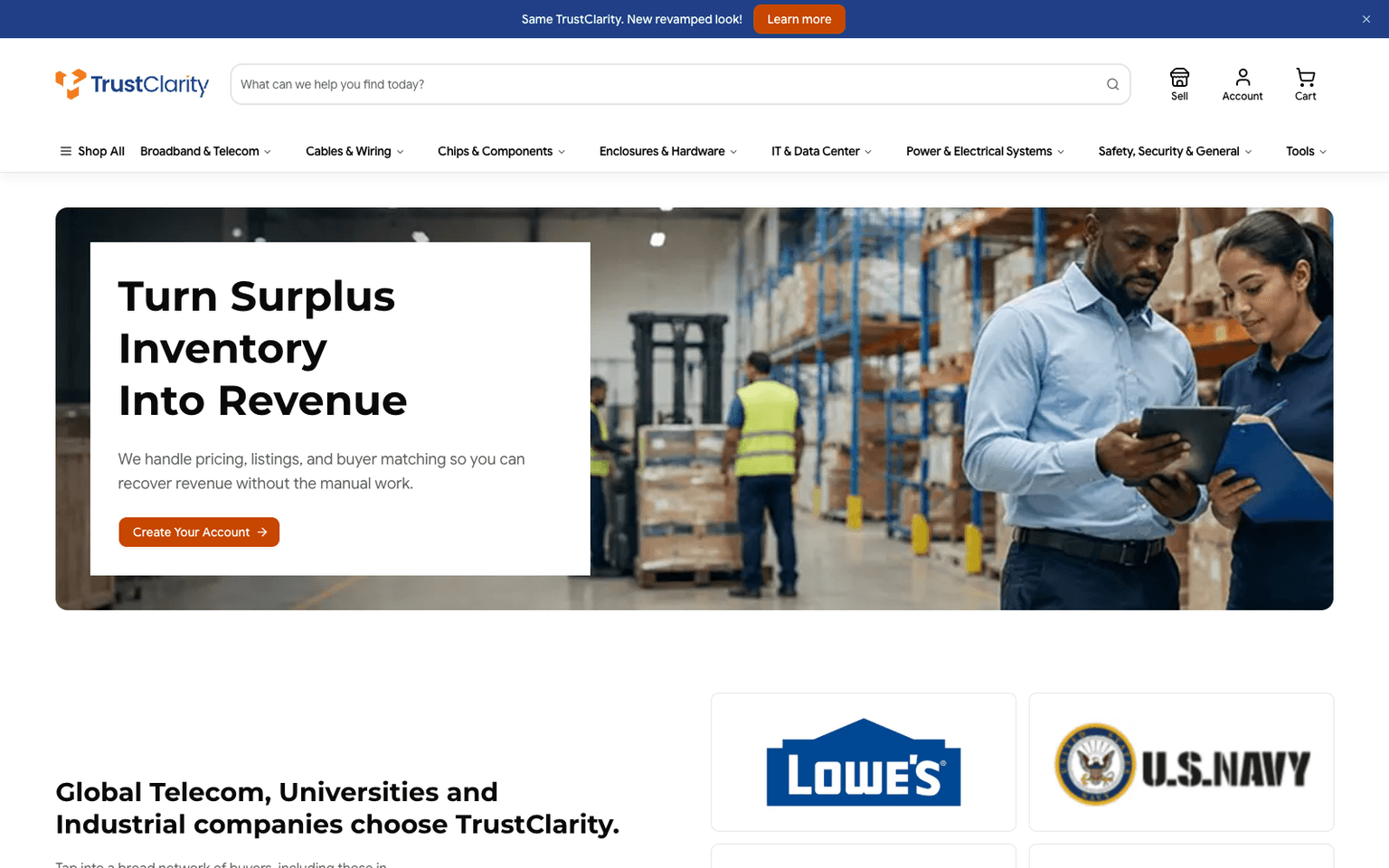
I rebuilt the corporate site on Bootstrap 5.3, replaced over 200 lines of conflicting CSS with a structured 520-line design system, and rewrote homepage copy around outcomes (Turn Excess Inventory Into Revenue) with social proof from featured brand logos. The highest-leverage SEO fix was correcting canonical URL generation so tags used the live page origin instead of a misconfigured environment value — that alone cleared the duplicate-canonical backlog in one deployment. I paired that with a dynamic sitemap, GTM migration, GA4 consolidation across both domains, Apollo visitor identification, and Klaviyo event tracking.
In parallel, I deployed a SigNoz stack on AWS ECS and instrumented all five services with OpenTelemetry (server traces, browser Web Vitals, log correlation, and custom knowledge-graph metrics), plus Terraform-managed alerts to Microsoft Teams. Claude became the delivery accelerator: I championed a Claude Team account, used Claude Code across the engagement, and wired the Claude API into three production n8n automations (Google Ads → Airtable, GitHub PR summaries to Teams, Jira status heartbeat). The Inventory Evaluation Tool started as a standalone POC; rather than leave it bolted on, we integrated it into the redesigned site so design system and product polish rose together.
What shipped, and what changed for the business?
The core redesign landed in 2 weeks; stakeholder feedback and inventory-tool integration extended the full rollout into a coherent release rather than a bolted-on experiment. 16,597 duplicate canonical SEO errors were resolved in a single deployment. Thirteen HTML pages shipped under the new design system. Five services report traces and Web Vitals to SigNoz with 21 Terraform-managed alerting rules. Three Claude-powered n8n workflows are in production with 70%+ resource reduction versus prior manual processes. The Inventory Evaluation Tool — delivered across 6 epics and 25+ stories — went live in March 2026 with drag-and-drop upload, batch pricing validation, streaming progress, and a results dashboard, and is now active in the sales process as a primary lead-generation driver.
The SEO outcome is easier to see as a before/after chart than as a wall of Search Console UI:
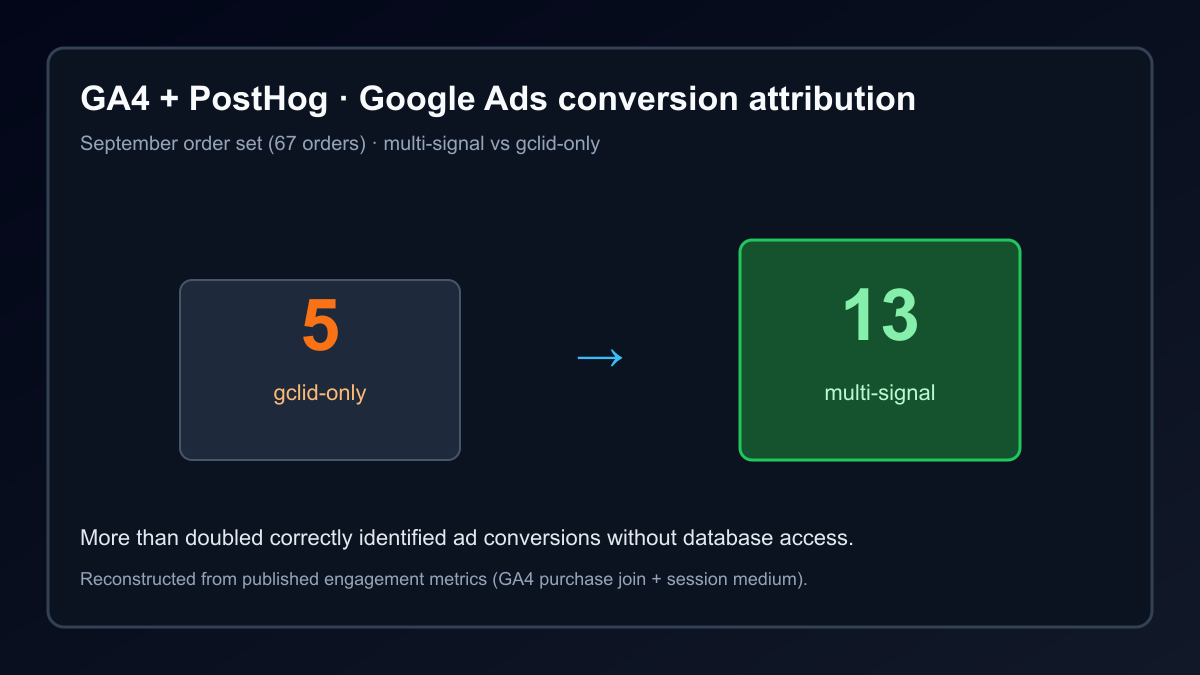
Later analytics work joined GA4 purchase events with PostHog order events on the same order set — without database access — and more than doubled correctly identified Google Ads conversions (5 → 13 on 67 orders) by using multi-signal attribution instead of gclid-only matching:
The public seller surface that grew out of that modernization still leads with the same revenue message:
MORE WORK
OTHER CASE STUDIES
TrustClarity: Buyer Portal Rebuild — Search-First TC 2.0 Platform
IMPACT:
400+ Storybook stories across 130+ components (from 11), WCAG 2.1 AA remediation, RFQ flow with server-side credential fix, and 1,533 lines of storefront code removed for a search-first pivot
React/Next.js rebuild of TrustClarity's core buyer workflows — Figma-to-production, WCAG 2.1 AA, Storybook/Chromatic visual gates, and a search-first architecture that replaced the per-org storefront layer.
TrustClarity: Orchestrating Google Jules Multi-Agent Delivery on the Buyer Platform
IMPACT:
Four signed merges into develop covering AGENTS.md plus three UAT fixes; one additional thumbnail/search fix with a TypeScript no-suppression governance lesson; durable signed-commit / pull-and-re-PR playbook confirmed across later Jules rounds
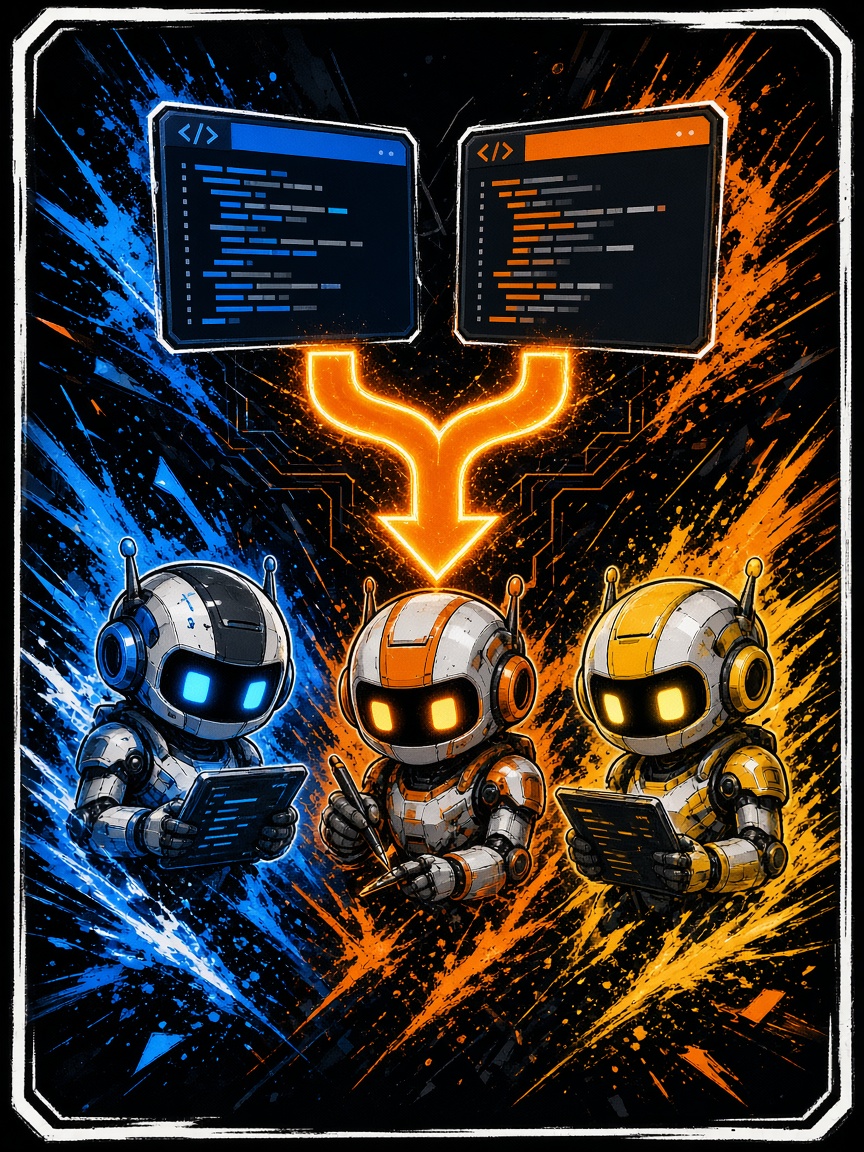
Production orchestration of Google Jules on the TrustClarity buyer platform — first and second UAT rounds, signed-commit re-PR playbook, prompt discipline, and AGENTS.md governance that kept parallel cloud sessions safe to merge.

TrustClarity: Supply-Chain Security Analysis and CI/CD Hardening
IMPACT:
14 of 20 repositories remediated before TrustClarity production; 3 attack vectors eradicated; SHA-pinned reusable security-scan workflow rolled out to 20 repos; later SHA-pin and merge-base invisibility controls shipped
Org-wide supply-chain security analysis for TrustClarity — malicious code found in 14 of 20 repositories across three attack vectors, remediated in repos before it reached TrustClarity's own production environment, followed by a SHA-pinned reusable CI/CD security pipeline and later hardening controls.